The TESAR Technique: Totally Endoscopic Sublay Anterior Repair
TESAR (Totally Endoscopic Sublay Anterior Repair) is a minimally invasive procedure that repairs midline defects and Diastasis by placing mesh in the retromuscular plane, behind the Rectus muscles, through small suprapubic ports. It closes the Linea Alba and reinforces it without opening the abdomen, reducing the size of the surgical wound.
What is the TESAR technique and how does it work?
TESAR stands for Totally Endoscopic Sublay Anterior Repair. It is a reconstruction of the abdominal midline carried out entirely through endoscopy, without opening the abdomen along its length. The camera and the instruments reach the working plane through small ports.
The principle is the one shared by all sound wall repairs: the defect is closed and then reinforced with a mesh laid in a deep, well-vascularized layer. What changes in TESAR is the route, which is anterior and minimally invasive, and the fact that the whole dissection is performed under endoscopic vision.
The term sublay refers to where the mesh sits: not on top of the muscles but behind them, in the retromuscular space. This position is generally considered biologically favorable, because the mesh is sandwiched between layers of living tissue rather than lying under the skin.
Where are the ports placed, and why are they suprapubic?
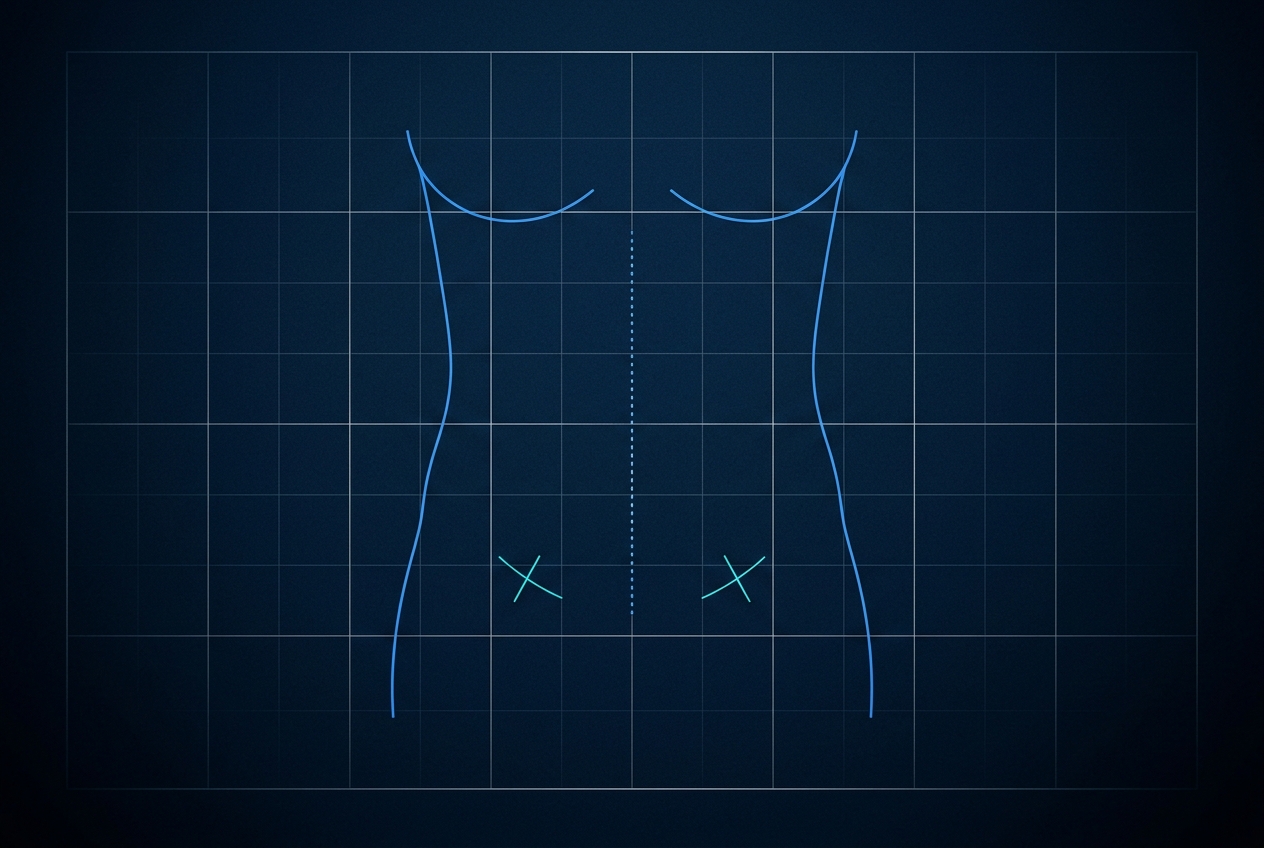
The access ports are placed low, in the suprapubic region, just above the pubic bone. From there the dissection is developed upward, along the back of the Rectus muscles, toward the umbilicus and beyond as needed.
There are two reasons for this choice. The first is anatomical: below the arcuate line the posterior sheath is thin or absent, which offers a natural corridor to enter the retromuscular plane safely. The second is aesthetic: scars sit in an area normally hidden by underwear, so the visible trace on the abdomen is minimal.
Working from below upward also keeps the camera and the instruments away from the bowel for most of the dissection, because the plane developed is outside the peritoneum. This tends to reduce the handling of intra-abdominal organs.
What is the retromuscular space, and why is it used?
The retromuscular space is the layer between the Rectus muscle and the posterior sheath that lies behind it. It is a real anatomical plane that can be opened and developed, giving room to place a wide mesh flat against the abdominal wall.
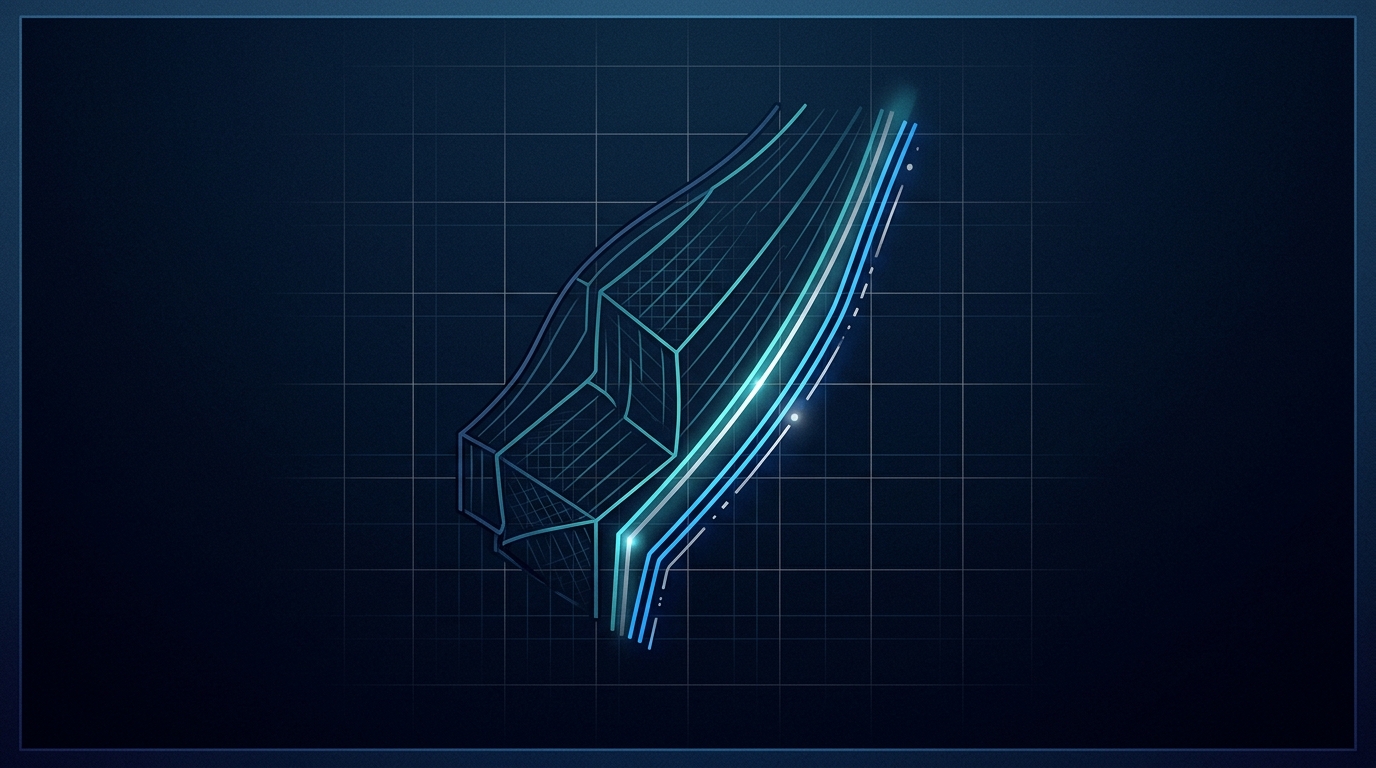
Placing the mesh here is preferable for a concrete reason: the reinforcement is held in position by the intra-abdominal pressure itself, which pushes it against the muscle from behind. The prosthesis is also separated from the bowel by the posterior sheath and the peritoneum, so direct contact with the intestine is avoided.
This contrasts with meshes placed superficially, above the muscle, which lie closer to the skin and are more exposed to seroma and to a palpable result. The retromuscular position, when it can be achieved, addresses both concerns at once.
When is TESAR indicated, and when is it not?
The indication is posed when there is a midline weakness that genuinely needs surgical reinforcement: a symptomatic Diastasis of the Rectus muscles, often combined with a small or medium ventral or umbilical hernia along the Linea Alba. The defect must be suited to an anterior, mesh-based repair.
It is worth being clear about one point. A Diastasis without a true hernia and without functional symptoms does not, in itself, require an operation. The bulge alone is not a disease, and the decision to operate rests on symptoms, on an associated hernia, or on a defect that keeps enlarging.
There are situations where TESAR is not the right tool. Very large or complex defects, loss of abdominal domain, extensive previous scarring in the working plane, or the need for major skin removal push the choice toward other reconstructive strategies. These cases are better served by open or robotic techniques, or by an abdominoplasty when redundant skin is the dominant problem.
- Reasonable candidates: symptomatic Diastasis with a small-to-medium midline hernia and good skin quality.
- Doubtful candidates: wide defects, marked skin excess, previous mesh in the same plane.
- Not candidates for TESAR alone: very large hernias, loss of domain, cases needing extensive dermolipectomy.
How the operation is carried out, in practice
The procedure is performed under general anesthesia. Through the suprapubic ports the retromuscular space is entered and inflated with gas, which creates the working chamber and the visibility the surgeon needs.
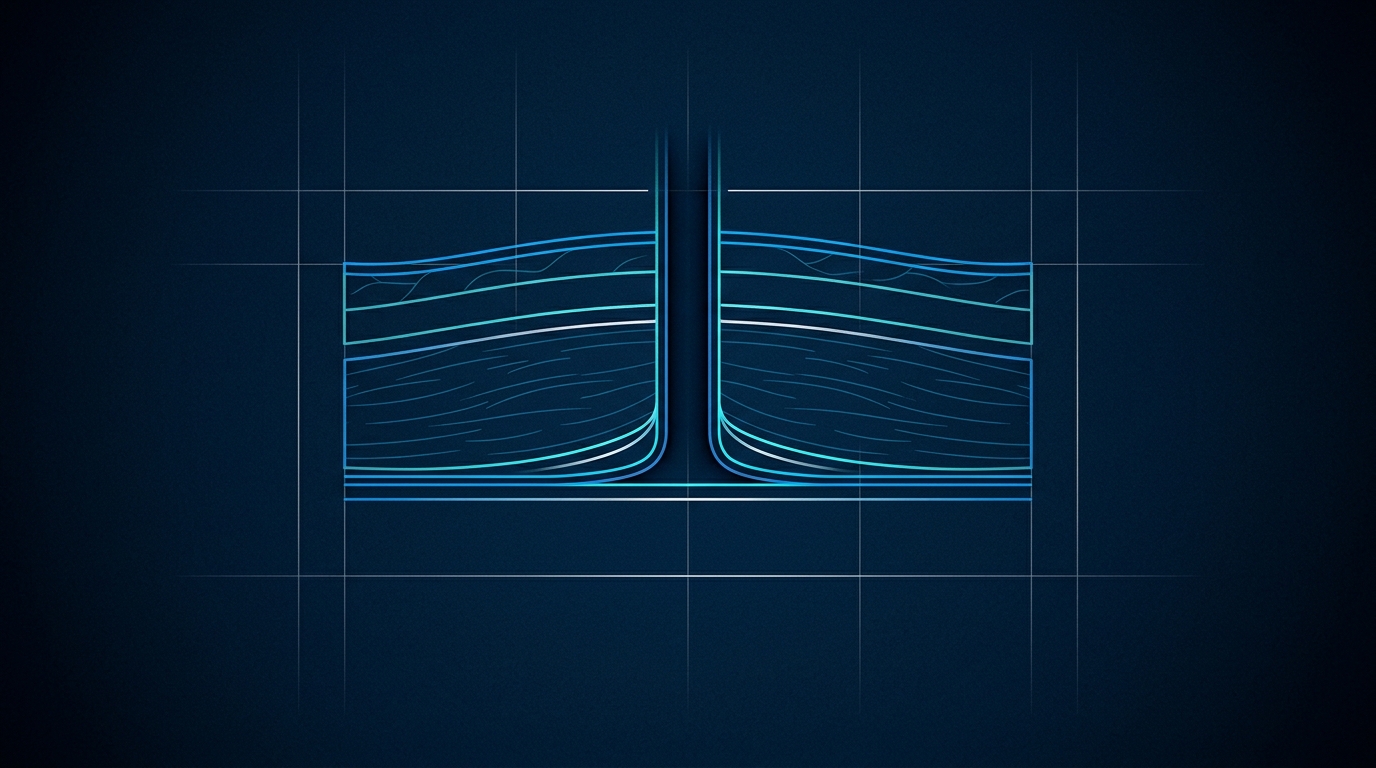
The plane is developed upward on both sides, freeing the back of each Rectus muscle. The posterior sheaths are then joined in the midline, and the anterior defect and the Diastasis are closed with a continuous suture that brings the muscles back to the center, restoring the line of the Linea Alba.
A mesh is positioned flat in the space just created, overlapping the repair in every direction. It is left to be held by the pressure of the wall itself, with fixation kept to a minimum. The gas is released, the small ports are closed, and the abdomen keeps its natural contour without a long incision.
What are the recovery times?
Recovery is generally faster than after open sublay repair, mainly because the surgical wound is far smaller. Many patients go home within one or two days, and everyday self-care resumes early, tendentially within the first week.
That said, the repair underneath is the same reconstruction, and the deep tissues need time to heal regardless of how small the scars are. Light activity comes back gradually over the first weeks, while a return to abdominal effort, weight training, and heavy lifting is usually deferred for several weeks, to be decided case by case.
An abdominal binder is commonly advised for a period, and some swelling or a firm feeling along the midline can persist for weeks. This is expected and settles over time; it should not be mistaken for a failure of the repair.
Risks and limits worth knowing in advance
No operation is without risk, and honesty here matters more than reassurance. The general risks of surgery apply: bleeding, infection, and the risks of anesthesia. Specific to this repair are seroma, temporary numbness or discomfort around the ports, and, less often, recurrence of the defect over time.
There is also a technical limit that should be stated plainly. TESAR is a demanding endoscopic reconstruction with a genuine learning curve, and it is not suitable for every anatomy. During surgery a conversion to an open approach may prove necessary, and this is a considered decision to keep the operation safe, not a complication in itself.
Finally, TESAR reinforces the wall; it does not remove excess skin. When loose skin or striae are the main concern, the functional repair and the aesthetic problem may need to be addressed separately, and this should be discussed before any decision is made.
Whether TESAR is the appropriate choice depends on the specific defect, the quality of the skin and muscle, and the goals of the individual case. A consultation with clinical examination, and imaging where indicated, allows these factors to be weighed and the alternatives to be compared honestly, so that the decision is informed rather than assumed.
Frequently asked questions
- Does TESAR leave visible scars?
- The scars are small and placed in the suprapubic region, an area normally hidden by underwear. There is no long midline incision, since the whole repair is carried out endoscopically through a few ports. Small marks may remain visible for some months and then fade, but the trace on the abdomen is limited compared with open techniques.
- Can TESAR correct diastasis without a hernia?
- It can address a Diastasis of the Rectus muscles by bringing them back to the center and reinforcing the midline. However, a Diastasis without a true hernia and without functional symptoms does not, on its own, require surgery. The indication is posed on symptoms or an associated defect, not on the visible bulge alone, and this distinction is assessed case by case.
- How is TESAR different from open sublay repair?
- The reconstruction and the mesh position are the same: behind the muscles, in the retromuscular plane. The difference is the route. TESAR reaches that plane endoscopically through small suprapubic ports rather than through a long incision. This tends to reduce wound-related pain and shorten early recovery, while the deep healing of the repair follows a similar timeline.
- When is TESAR not the right choice?
- TESAR is not suitable for very large or complex defects, for loss of abdominal domain, for extensive previous scarring in the working plane, or when substantial skin removal is needed. In these situations open or robotic techniques, or an abdominoplasty, may be more appropriate. The correct approach depends on the specific anatomy and is decided after clinical evaluation.
- How long before returning to sport after TESAR?
- Everyday activity generally resumes within the first week, but abdominal effort, weight training, and heavy lifting are usually deferred for several weeks. The exact timing is individual and depends on the size of the repair and on healing. An abdominal binder is often advised for a period, and the return to full effort is agreed at follow-up rather than fixed in advance.
Published on: 2026-09-08 · Content by Dr. Federico Fiori