Diastasis and Running: What to Clarify Before Going Back
Running with an abdominal diastasis is generally safe once the abdominal wall can manage load without pain, doming, or leaking. There is no fixed deadline: the return depends on symptoms and control, not on the width of the gap. A gradual progression, guided by how the wall responds, is preferable to a calendar date.
What the literature says and what it does not say
The honest starting point is that the evidence on diastasis and running is thin. Most studies on rectus diastasis look at prevalence, at conservative exercise, or at surgical repair, and very few address the specific question of impact sport.

What can be stated with reasonable confidence is that the width of the separation, measured in centimeters, correlates poorly with symptoms and with function. A wider gap does not automatically mean more limitation, and a narrow one does not guarantee a comfortable return to running.
There is also no controlled trial telling us that running worsens a diastasis or that resting closes it. This absence of data cuts both ways: it does not license recklessness, and it does not justify open-ended prohibition. The reasoning has to rest on mechanics and on the individual response, since the literature offers no precise threshold.
A practical consequence follows. Advice built on a single ultrasound measurement, or on a fixed number of months, tends to be arbitrary. What matters more is the observed behavior of the abdominal wall under the load that running actually produces.
What running really asks of the abdominal wall
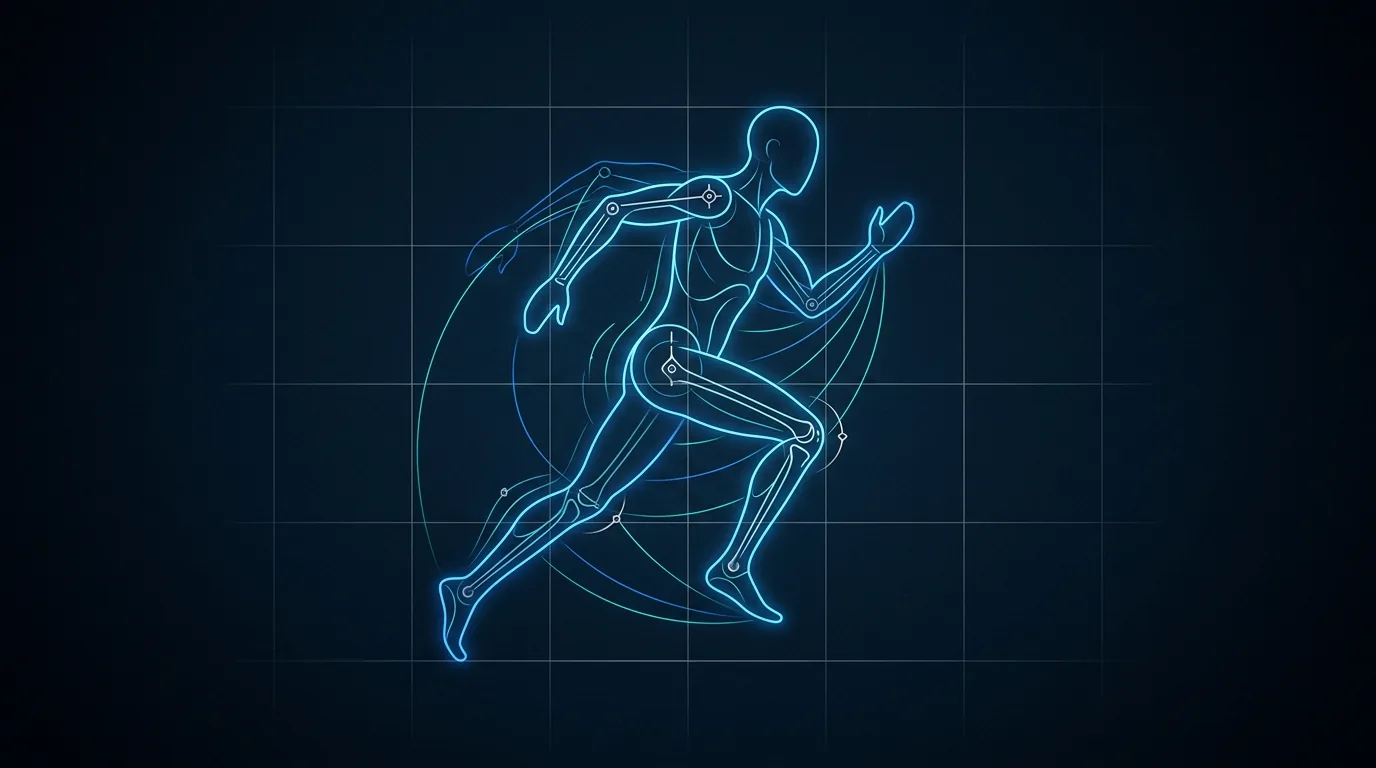
Running is a sequence of impacts. At each foot strike the trunk absorbs a force several times body weight, and the abdominal wall participates in stabilizing the spine and the pelvis while breathing continues rhythmically.
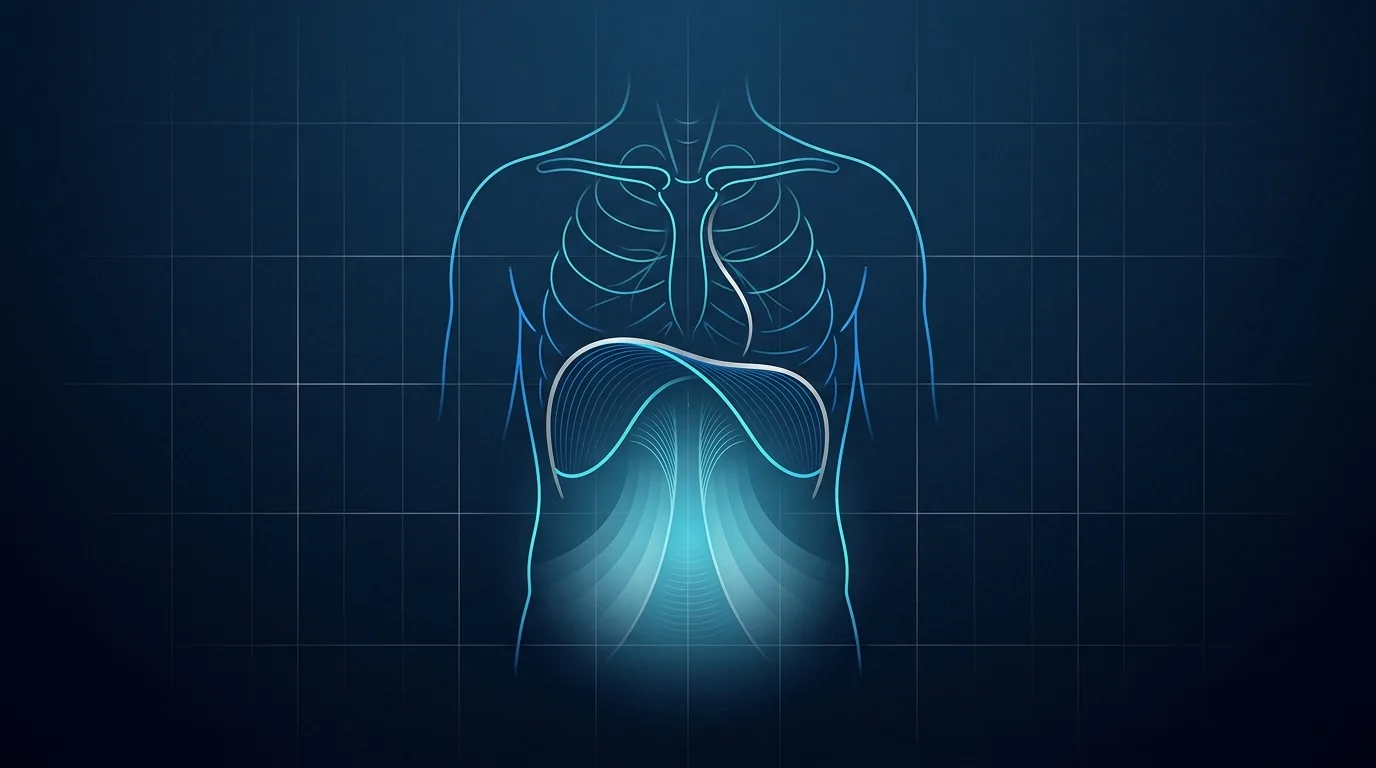
The Linea Alba, the fibrous midline that widens in a diastasis, transmits tension between the two Rectus muscles. When this midline is lax, the wall may still stabilize the trunk well, provided the surrounding musculature and the deep control system compensate. The question is whether that compensation holds under repeated impact.
Two things are worth watching. The first is doming, the outward bulging of the midline under effort, which suggests that pressure is not being managed evenly. The second is the pelvic floor, since running loads it heavily and continence problems often travel alongside diastasis, especially after pregnancy.
- Impact tolerance: whether repeated foot strike provokes pain along the midline or in the low back.
- Pressure management: whether the abdomen bulges or domes when running or on exertion.
- Pelvic floor behavior: whether running triggers leaking of urine or a sensation of heaviness.
- Breathing under load: whether the trunk stays controlled while breathing hard.
None of these points is captured by the gap measurement alone. They describe how the wall functions, which is what running actually challenges. This is why the return is judged on behavior rather than on anatomy in isolation.
A progression that respects the wall
The guiding idea is gradual exposure. The abdominal wall, like any structure, adapts to load that increases slowly and tolerates poorly a sudden jump from inactivity to sustained running.
A reasonable sequence starts with walking, extended over time and distance, and progresses toward brisk walking on varied ground. This phase rebuilds tolerance to sustained upright effort without the impact of running, and it is where control of breathing and posture is reestablished.
The next step introduces running in short intervals interspersed with walking, for example brief run segments within a longer walk. The duration of the run segments grows only if the previous session provoked no bulging, no midline pain, and no leaking. If a session goes badly, the sensible move is to return to the previous level rather than push through.
Work on the deep abdominal and pelvic floor musculature runs in parallel, not as a prerequisite that must be completed first. Restoring coordinated control of intra-abdominal pressure supports the return to running more than any attempt to force the gap to close, which exercise alone rarely achieves in a meaningful way.
When warning signs appear
Persistent bulging along the midline, pain that lingers after a run, or new leaking of urine are reasons to step back a level and reassess. They are signals about load management, not verdicts on whether running will ever be possible.
If these signs persist despite a careful progression and dedicated pelvic and abdominal work, an in-person evaluation is warranted. It clarifies whether a functional problem, a coexisting hernia, or a pelvic floor issue is driving the symptoms, each of which changes the plan.
The questions worth asking
Before returning to running, a few questions frame the decision more usefully than the width of the gap. They shift attention from anatomy to function, which is what determines whether the return goes well.
- Does effort produce visible doming or bulging along the midline?
- Is there pain, in the abdomen or the low back, during or after activity?
- Is there any leaking of urine, or a sense of pelvic heaviness, under load?
- Is there a coexisting hernia at the umbilicus or along the midline that changes the picture?
- Has a gradual progression been tried, or is the jump straight to full running?
An honest answer to these questions guides the pace of the return. A clean set of answers argues for confidence; recurring warning signs argue for slowing down and, if they persist, for a formal assessment.
It is worth distinguishing diastasis from a true hernia, because the two are often confused and the implications differ. A diastasis is a widening of the midline without a defect in the fascia; a hernia is a defect through which tissue can protrude. When a hernia coexists, the reasoning about impact sport changes, and this is one reason clinical examination matters beyond any measurement.
Also worth reading
The relationship between diastasis, symptoms, and function is covered in more depth in the articles on conservative management and on the difference between diastasis and abdominal hernia. Readers interested in the postpartum context will find the discussion of timing after pregnancy relevant, since much of the concern about running arises in that period.
Sources
The reasoning here draws on the general literature on rectus abdominis diastasis, which documents the weak correlation between inter-recti distance and symptoms, and on the biomechanics of trunk stabilization during impact activity. No randomized trial specifically addresses running with diastasis, and this limitation is stated openly rather than concealed behind a precise-sounding threshold.
Anyone weighing a return to running with a known diastasis is best served by an in-person assessment that examines the abdominal wall under load, checks for a coexisting hernia, and considers pelvic floor function. Such an evaluation replaces general rules with advice tailored to the individual, and it is the concrete next step when doubts remain after a careful, gradual progression.
Frequently asked questions
- Does the gap have to close before I can run again?
- No. The width of the separation correlates poorly with symptoms and function, and exercise rarely closes a diastasis fully. What matters is whether the abdominal wall manages the impact of running without pain, bulging, or leaking. A wall that functions well under load can tolerate running even if the midline remains somewhat wide, so the decision rests on behavior rather than on centimeters.
- How many weeks after childbirth is it safe to start running?
- There is no single number that fits everyone. The postpartum abdominal wall and pelvic floor need time to recover, and a gradual progression from walking to interval running is more reliable than a fixed date. The return depends on how the body responds to increasing load, on the absence of warning signs, and on adequate pelvic floor control, all assessed individually rather than by calendar.
- What warning signs mean I should stop or slow down?
- Persistent bulging or doming along the midline, pain during or after running, new leaking of urine, and a sensation of pelvic heaviness are the main signals. They usually mean the load is outpacing the wall's ability to manage pressure. The sensible response is to step back to the previous level of a gradual progression, not to abandon running, and to seek assessment if the signs persist.
- Can running make a diastasis worse?
- There is no controlled evidence that running worsens a diastasis, just as none shows that rest closes it. This uncertainty argues against both recklessness and blanket prohibition. A gradual, symptom-guided return, watching for doming and pelvic floor signs, is the reasonable path. If a hernia coexists with the diastasis, the reasoning changes, which is one reason an examination is worthwhile before committing to impact sport.
- Should pelvic floor work come before returning to running?
- It runs in parallel rather than as a gate that must be cleared first. Restoring coordinated control of intra-abdominal pressure and pelvic floor function supports a return to running and reduces leaking under load. Waiting for the gap to close is less useful, since exercise seldom achieves that. Building deep abdominal and pelvic floor control while gradually reintroducing impact is the more coherent approach.
Published on: 2026-10-06 · Content by Dr. Federico Fiori