Inguinal Hernia: Mesh or Suture, Which Technique to Choose?
For most adults with an inguinal hernia, mesh repair is preferred because it lowers the risk of recurrence. Pure suture (tissue) repair remains reasonable in small hernias, in young patients, when a prosthesis is contraindicated, or in a contaminated field. The choice is individual.
What does an inguinal hernia repair actually fix?
An inguinal hernia is a defect in the posterior wall of the inguinal canal, in the groin. Through it, peritoneum and sometimes bowel or omentum protrude, producing a bulge that enlarges over time. The weakness is mechanical, so it does not reverse spontaneously.

Repair has one structural goal: to reinforce or close that defect so the abdominal content stays inside. The two historic ways of achieving this are reinforcing the wall with a prosthetic mesh, or approximating the native tissues with sutures. Everything else is a variation on these two ideas.
Deciding between them is not a matter of fashion. The defect size, the quality of the surrounding tissue, the patient's age and physical demands, and the surgical access all weigh on the choice. Dobbiamo, dunque, distinguere the situations in which one approach is genuinely preferable.
Mesh repair: why it became the standard
In mesh (prosthetic) repair, a flat synthetic sheet is placed to bridge and reinforce the weakened wall. The tissue grows into the mesh over the following weeks, creating a durable reinforced layer. The defect is covered rather than pulled closed under tension.
The main argument in its favor is the lower recurrence rate. Because the mesh distributes load across a wide area and does not rely on stretching native tissue, the repair holds even when the original wall is thin or attenuated. This is why mesh repair is preferred in the majority of adult hernias.
A tension-free repair also tends to be more comfortable in the early postoperative period, since the tissues are not approximated under strain. Recovery of normal activity is, in general, reasonably quick, though it varies with the technique and the individual.
The limits of mesh that deserve to be named
A mesh is a foreign material, and this carries its own set of considerations. A minority of patients develop chronic groin pain after mesh repair, sometimes related to nerve entrapment or scar tissue around the prosthesis. The reported figures vary widely across studies and surgical techniques.
Mesh-related complications, though uncommon, include infection, a sensation of stiffness in the groin, and, rarely, erosion into adjacent structures. In a contaminated or potentially infected field, placing a permanent synthetic prosthesis is generally avoided, because an infected mesh is difficult to salvage.
Tissue (suture) repair: when the native wall is enough
In pure tissue repair, no prosthesis is used. The surgeon approximates the patient's own structures with sutures, restoring the posterior wall of the inguinal canal. The best known is the Shouldice technique, which reconstructs the wall in overlapping layers.
The appeal is clear: nothing synthetic is left in the body. There is no mesh to become infected, no foreign material to generate stiffness or chronic irritation. For a young patient, or for someone who cannot receive a prosthesis, this is a meaningful advantage.
The historical weakness of tissue repair is tension. Bringing tissues together under strain can cause early postoperative discomfort and, if the native tissue is weak, a higher recurrence rate. This is precisely the problem that mesh was designed to solve.
That said, in experienced hands and with careful patient selection, a meticulous tissue repair such as the Shouldice can achieve results close to mesh repair for small and medium hernias. The quality of the execution matters a great deal here.
So which technique is preferable, and for whom?
There is no single answer that fits every groin. The reasoning starts from the defect and the person, not from a preference for one method. Va valutato caso per caso, weighing recurrence risk against the drawbacks of a prosthesis.
As a working framework, the following considerations tend to guide the decision:
- Large or recurrent hernias, and attenuated tissue: mesh repair is generally preferred, because tissue approximation would be under too much tension and prone to failure.
- Small hernias in young, fit patients: a well-executed tissue repair is a reasonable option, sparing the patient a permanent prosthesis.
- Contaminated or infected surgical field: a permanent synthetic mesh is usually avoided; tissue repair or a biological material may be considered.
- Patient preference to avoid a foreign body: this is legitimate and should be discussed, provided the higher recurrence risk of tissue repair is understood.
- Bilateral or complex cases: a minimally invasive mesh approach is often favored, because it treats both sides through small incisions.
These are tendencies, not rules. A detailed clinical examination, and sometimes imaging, refine the picture. The indication is set when the balance of recurrence risk, comfort, and patient circumstances points clearly in one direction.
Open or minimally invasive: a separate question
Mesh versus suture is not the same question as open versus laparoscopic. A mesh can be placed through an open groin incision or through a minimally invasive posterior approach. Tissue repair, by contrast, is performed open.
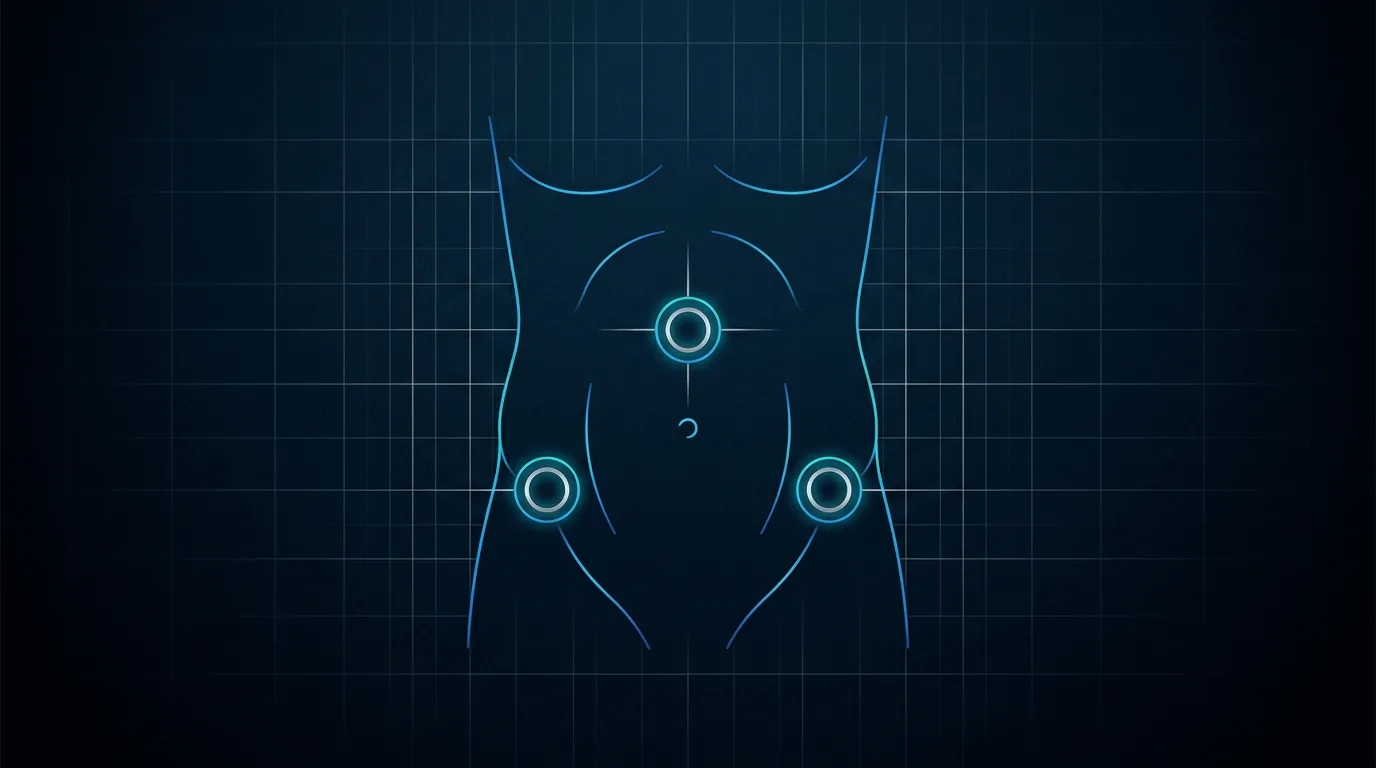
Minimally invasive mesh techniques can offer less postoperative pain and a faster return to activity, particularly for bilateral or recurrent hernias. They require general anesthesia and specific expertise, so they are not automatically superior for every patient. Consideriamo access and anesthesia as part of the overall plan, not in isolation.
What to ask before the operation
A frank conversation before surgery is worth more than any general recommendation. It helps to understand why a particular technique is being proposed for a particular hernia, rather than accepting a default.
Useful points to clarify include the size and type of the hernia, the expected recurrence risk with each option, whether a mesh is being advised and why, the anesthesia planned, and the realistic timeline for returning to work and physical activity. Honest answers to these questions are the foundation of a sound choice.
Whoever considers surgery for an inguinal hernia is encouraged to discuss both mesh and tissue options in a dedicated consultation, where the specific anatomy and personal circumstances can be examined and a tailored plan agreed upon.
Frequently asked questions
- Is mesh repair always better than suture repair?
- No. Mesh repair lowers the recurrence rate and is preferred for most adult hernias, especially large or recurrent ones. Tissue repair with sutures remains a reasonable choice for small hernias in young patients, when a prosthesis is contraindicated, or in a potentially infected field. The decision depends on the defect, the tissue quality, and the person, and should be made individually.
- Can an inguinal hernia be repaired without a mesh?
- Yes. Pure tissue techniques, such as the Shouldice repair, reconstruct the posterior wall of the inguinal canal using the patient's own tissues and sutures, with no prosthesis. This avoids any foreign material. The trade-off is a somewhat higher recurrence risk when tissues are weak or the hernia is large, so careful patient selection and meticulous execution are essential.
- Does a mesh cause chronic pain?
- A minority of patients report chronic groin pain after mesh repair, sometimes linked to nerve involvement or scar tissue around the prosthesis. Reported rates vary widely depending on the technique and study. Chronic pain can also follow tissue repair. The risk cannot be eliminated entirely, but careful surgical technique and appropriate mesh placement help reduce it.
- Will an inguinal hernia go away on its own?
- No. An inguinal hernia is a mechanical defect in the abdominal wall and does not heal spontaneously. It tends to enlarge over time. Surgery is the only definitive repair. A small, asymptomatic hernia may sometimes be watched rather than operated immediately, but this is a monitoring strategy, not a cure, and should be decided with a surgeon.
- How soon can normal activity resume after hernia surgery?
- It depends on the technique and the individual. Tension-free mesh repairs, and minimally invasive approaches in particular, generally allow a relatively quick return to light activity, often within one to two weeks. Heavier physical effort usually waits longer. Tissue repair under some tension may be more uncomfortable early on. Specific timelines should be discussed with the operating surgeon.
Published on: 2026-10-09 · Content by Dr. Federico Fiori