Glossary: the acronyms of minimally invasive abdominal wall surgery
ELAR, MILAR, SCOLA, REPA, EPAR, FESSA, TESAR, eTEP, PeTEP, sMILOS, EMILOS, TES: behind these different acronyms are procedures that differ in only two variables — where the wall is accessed from and in which plane the mesh is placed, when it is placed at all. This glossary puts the terms in order and points, for each one, to the original description.
Where the wall is accessed from: anterior and posterior approaches
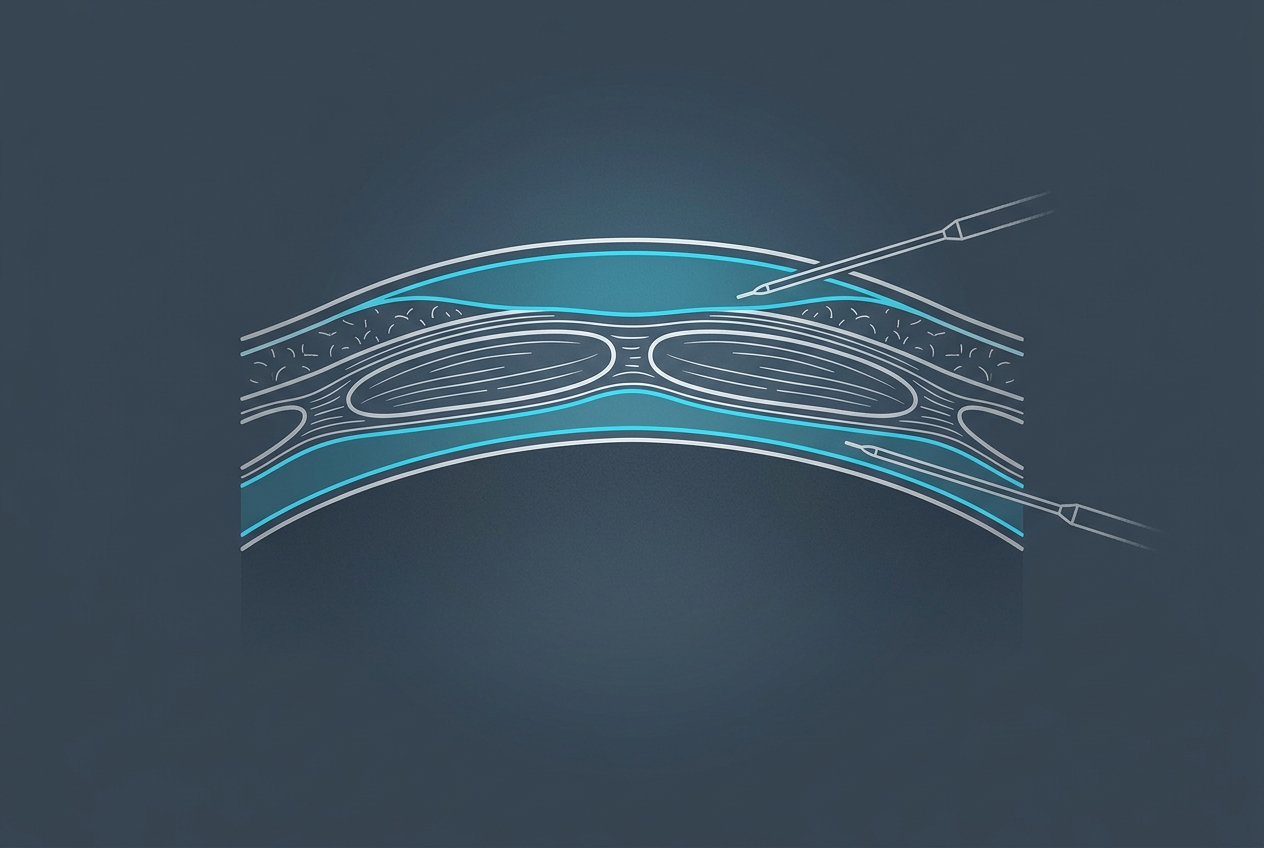
The primary distinction is not the acronym but the point of access. In anterior approaches the work is done in front of the wall, in the pre-aponeurotic space, between the skin and the fascia. In posterior approaches the work is done behind the muscle, either directly in the retromuscular space, directly in the preperitoneal space, or through a transabdominal route. When the procedures are performed on a robotic platform, the acronym is preceded by the letter “r”.
Anterior approaches
Access is in the pre-aponeurotic space. What differs between the techniques is whether the edges of the defect are brought together or not, and the plane in which the mesh is placed.
- ELAR — Endoscopic-assisted Linea Alba Reconstruction (Köckerling, 2016): onlay mesh over the defect, without approximating the edges.
- MILAR — Minimally Invasive Linea Alba Reconstruction (Privett and Ghusn, 2016): a variant of ELAR, bridging onlay mesh.
- TESLAR — Totally Endoscopic Single-port Linea Alba Reconstruction (Juárez Muas, 2019): single-port access, onlay mesh.
- SCOLA — Subcutaneous Onlay Laparoscopic Approach (Claus, 2018): muscle plication and optional onlay mesh above the plication.
- REPA — Reparación Endoscópica Preaponeurótica (Juárez Muas, 2019): plication and onlay mesh, always included in the original description.
- EPAR — Endoscopic Pre-Aponeurotic Repair (Bellido Luque, 2015): pre-aponeurotic endoscopic plication, mesh not always placed.
- FESSA — Full Endoscopic Subcutaneous Suprapubic Access (Iacobone, 2020): bridging onlay mesh.
- SCOM — laparoscopic repair with a subcutaneous onlay mesh: onlay mesh after plication.
- SVAWD — Subcutaneous Video-Assisted Wall Defect repair: video-assisted subcutaneous access.
- Bilayer technique (Ngo, 2020): double plication suture without mesh.
- ENDOR — Endoscopic Onlay Repair (Malcher, 2021): unifying term proposed for the whole group of endoscopic repairs with an onlay mesh.
- TESAR — Totally Endoscopic Sublay Anterior Repair (Fiori, 2019): anterior access with the mesh in the retromuscular plane; in the 2024 classification it is the only anterior technique with a sublay mesh.
Posterior approaches
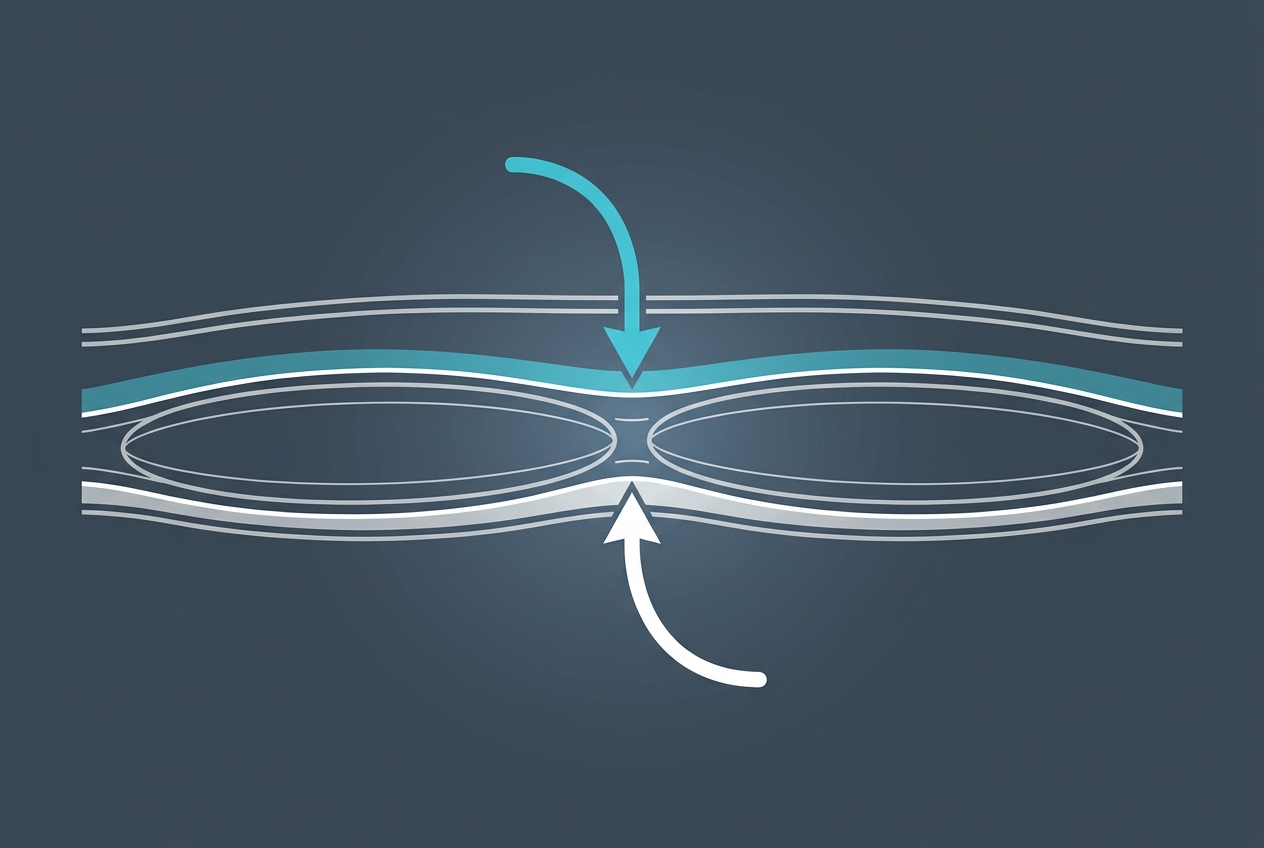
Access is in the retromuscular space. The mesh is isolated between the muscle planes and does not stay in contact with the subcutaneous tissue.
- MILOS — Mini or Less Open Sublay (Reinpold, 2019): hybrid access, retromuscular mesh.
- EMILOS — Endoscopic Mini or Less Open Sublay (Schwarz, 2017): fully endoscopic variant of MILOS.
- TES — Totally Endoscopic Sublay (Li, 2018): retromuscular mesh through a fully endoscopic route.
- SIL-TES — Single Incision Laparoscopic Totally Endoscopic Sublay (Li, 2020): single-incision TES.
- eTEP — enhanced view Totally Extra Peritoneal (Belyansky et al., 2018): direct extraperitoneal retromuscular access, retromuscular mesh. The technique was described earlier by Marc Miserez as Endoscopic Totally Preperitoneal Ventral Hernia Repair, 2002.
- PeTEP — Preperitoneal eTEP (Valenzuela, 2023): direct suprapubic preperitoneal approach with retromuscular preperitoneal/pre-transversalis dissection in the cranial direction. The technique was described earlier by Li and Bittner in 2020 as TEA, Totally Extraperitoneal Approach Cranial.
- cranial PeTEP — cranial Preperitoneal eTEP (Monclus, 2025): direct subxiphoid preperitoneal approach with retromuscular preperitoneal/pre-transversalis dissection in the caudal direction. The technique was described earlier by Li and Bittner in 2020 as eTPA, endoscopic Totally Preperitoneal Approach: mesh in the preperitoneal plane.
- E-MILOP — Endoscopic Mini or Less Open Preperitoneal repair (Nakabayashi, 2023): trans-hernial access to the preperitoneal space and preperitoneal mesh.
- THT — Trentino Hernia Team (Carrara, 2018): laparoendoscopic access, umbilical single port, stapled division and closure, retromuscular mesh.
- miSAR — minimally invasive Stapled Abdominal wall Reconstruction (Manetti, 2021): suprapubic transabdominal access and stapled division and closure of the fascia. Retromuscular mesh.
- vTAPP — ventral Trans Abdominal Pre Peritoneal (Felix, 1994, for the repair of Spigelian hernia): transabdominal approach with preperitoneal dissection and preperitoneal mesh.
- LIRA — Laparoscopic Intracorporeal Rectus Aponeuroplasty (Menchero, Morales, 2018): transabdominal approach, bilateral incision of the posterior fascia and midline plication of it to close the defect, intraperitoneal mesh.
- PeIRA — Preperitoneal endoscopic Intracorporeal Rectus Aponeuroplasty (Menchero, Morales, 2026): LIRA with preperitoneal placement of the mesh.
- IPOM — Intra Peritoneal Onlay Mesh, today IPUM, Intra Peritoneal Underlay Mesh: transabdominal approach with an intraperitoneal mesh. IPOM plus and IPUM plus indicate closure of the defect before the mesh is placed.
The techniques compared
| Technique | Access | Mesh plane | Edges approximated |
|---|---|---|---|
| ELAR, MILAR, TESLAR, FESSA | Anterior, pre-aponeurotic | Onlay, in front of the fascia | No: bridging mesh |
| SCOLA | Anterior, pre-aponeurotic | Onlay, when used | Yes, plication |
| REPA | Anterior, pre-aponeurotic | Onlay, always included | Yes, plication |
| EPAR | Anterior, pre-aponeurotic | Onlay, not always | Yes, plication |
| TESAR | Anterior | Sublay, behind the rectus muscle | Yes, reconstruction of the midline |
| MILOS, EMILOS, TES, SIL-TES, eTEP | Posterior, retromuscular | Retromuscular | Yes |
| PeTEP, cranial PeTEP, E-MILOP | Posterior, preperitoneal | Preperitoneal | Yes |
| vTAPP | Transabdominal | Preperitoneal | Yes |
| THT, miSAR | Transabdominal | Retromuscular | Yes, stapled division and closure |
| LIRA | Transabdominal | Intraperitoneal | Yes, plication of the posterior fascia |
| PeIRA | Transabdominal | Preperitoneal | Yes, plication of the posterior fascia |
| IPOM, IPUM | Transabdominal | Intraperitoneal | No; yes in the “plus” variants |
| MILA | Anterior | Onlay in the original description, any minimally invasive plane in practice | Yes, plication or minimally invasive repair |
Bridging mesh or mesh over a plication?
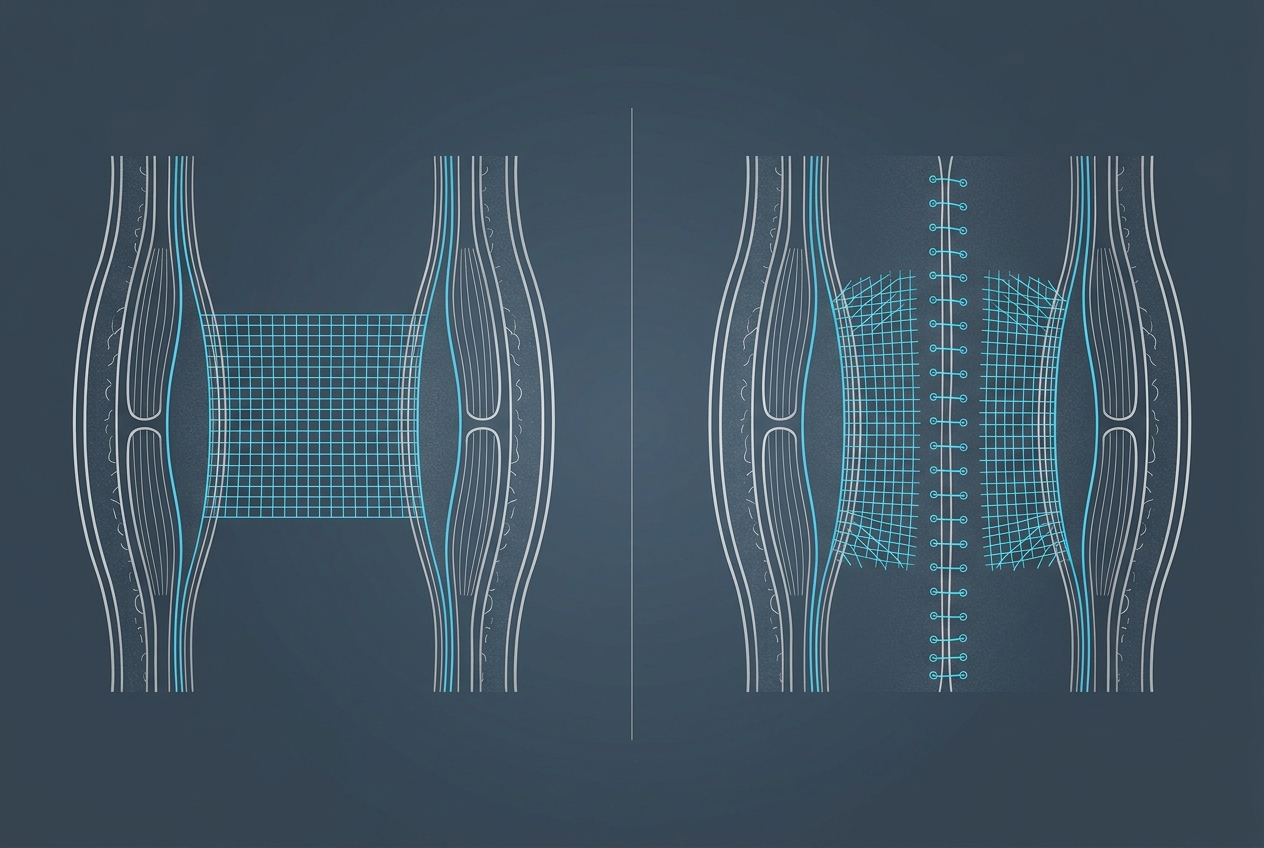
In ELAR, FESSA and MILAR the mesh covers the defect without the edges being brought together. In SCOLA and REPA the mesh is placed above a muscle plication: the edges are first approximated, then reinforced. It is a substantial difference, because in the first case the linea alba is not reconstructed.
REPA and SCOLA are not synonyms
They are often used as if they were. In the original description REPA always includes the onlay mesh above the plication; SCOLA includes it but not always, and in current usage the term is applied even when no mesh is placed at all. In that last case the correct reference is the endoscopic plication described by Bellido Luque in 2014-2015, in which the mesh was sometimes placed for the umbilical hernia only.
Why so many names for the same procedure
The problem has been raised explicitly in the literature. In 2021 Malcher and colleagues published a qualitative systematic review titled “Endoscopic onlay repair for ventral hernia and rectus abdominis diastasis repair: why so many different names for the same procedure?” (Surgical Endoscopy 2021;35(10):5414-5421), concluding that the technical variations described do not produce significant differences in outcomes and proposing the unifying term ENDOR to denote the anterior approaches with or without an onlay mesh.
The origins of the anterior approach
- Corrêa, Brazil, 1994-1995: videoendoscopic subcutaneous abdominoplasty, with instruments developed specifically for it (Plastic and Reconstructive Surgery 1995;96(2):446-453).
- Champault, Catheline and Barrat, France, 1999: parietoscopic treatment of abdominal wall defects, with insufflation in the pre-aponeurotic plane (Hernia 1999;3(1):15-18).
- Chevrel, France, 1979: treatment of large midline incisional hernias with plasty and mesh, the origin of the onlay position (Nouvelle Presse Médicale 1979;24:695-696).
How to read this glossary
The acronyms are not hierarchies of value: they denote technical variants described by different groups. Faced with a midline defect, the useful questions are different ones: are the edges brought together or does the mesh stay as a bridge, in which plane does the mesh go, and is that choice consistent with the problem of the individual patient. The sources cited on this page make it possible to check every definition against the original description.
MILA: minimally invasive lipoabdominoplasty
The morpho-functional approach to the abdominal wall
Frequently asked questions about the acronyms
- What is the difference between REPA and SCOLA?
- In the original description REPA always includes an onlay mesh. SCOLA includes an onlay mesh above a muscle plication, and in current usage the term is also applied when no mesh is placed at all. They are often used as synonyms, but the original descriptions differ.
- What is ENDOR?
- It is the term proposed in 2021 by Malcher and colleagues to bring endoscopic repairs using an onlay mesh under a single name, after observing that the described variants do not produce significant differences in outcomes.
- Why are there so many acronyms?
- Because within a few years different groups in different countries described minimal variants of the same procedure, each giving it a name. The literature has acknowledged the phenomenon and discussed it explicitly in a 2021 systematic review.
- Does the plane of the mesh make a difference?
- It is the element that technically distinguishes these procedures from one another, together with the presence or absence of the mesh itself. The plane determines whether the mesh stays in contact with the subcutaneous tissue or is isolated between the muscles, and the comparative literature on mesh planes in incisional hernia surgery is available and can be consulted.
- What does the letter “r” in front of an acronym mean?
- It indicates that the procedure is performed on a robotic platform: the acronym of the technique stays the same and is simply preceded by the letter “r”. The working plane and the position of the mesh do not change.
Last updated: 2026-08-20 · Content by Dr. Federico Fiori