Abdominoplasty: Who It Helps, What It Corrects, and How the Candidate Is Assessed
Abdominoplasty corrects excess abdominal skin and a lax muscular wall, typically after significant weight loss or one or more pregnancies. It is not a method for losing weight or removing deep fat. The candidate is assessed on weight stability, smoking, completed pregnancies, skin quality, and whether rectus diastasis coexists.
What does abdominoplasty actually correct?
The operation addresses three problems that often travel together but are not the same thing. Confusing them leads to disappointment, because each responds to a different treatment and only one of them truly needs surgery of this kind.
Excess skin is the main target. When the abdominal skin has been stretched over a long period and has lost its ability to retract, no amount of weight loss will tighten it. It hangs, folds over itself, and can cause irritation or discomfort.
Localized fat is a different matter. A fat layer under the skin can be reduced by weight loss, and sometimes addressed with liposuction, but this is not what abdominoplasty is designed for. Removing skin and removing fat are distinct goals.
Wall laxity is the third element. The abdominal wall can become slack, and the midline where the two rectus muscles meet can widen. When this is present, tightening the skin alone leaves the underlying shape unchanged, and the assessment has to account for it.
Why diet and exercise do not fix excess skin
This is the question most candidates ask, and the honest answer is physiological. Skin is an elastic organ, but its elasticity has limits. Once it has been stretched beyond those limits for long enough, the elastic fibers do not recover, and the skin behaves like fabric that has lost its shape.
Diet reduces fat volume, which can even make loose skin more evident, because the support underneath shrinks while the envelope stays the same size. Exercise strengthens muscle, which improves tone and posture, but it works on tissue beneath the skin, not on the skin itself.
So the common advice to "just lose a bit more and tone up" is sound for fat and for muscle, and it should always come first. It simply has no effect on a skin envelope that has already failed to retract. Recognizing this distinction is the starting point of any realistic conversation.
What should be settled before considering surgery
Several conditions improve both the safety of the operation and the durability of the result. None of them is a formality; each has a concrete reason, and when they are ignored the outcome tends to suffer.
- Stable weight: the result reflects the body at the time of surgery. Significant weight gain or loss afterward can stretch or loosen the tightened skin again, so weight should be stable for several months.
- No active smoking: smoking narrows the small vessels that supply the skin and markedly raises the risk of poor healing and wound breakdown. Stopping well in advance is one of the most useful things a candidate can do.
- Completed pregnancies: a future pregnancy will stretch the abdomen again and can undo a wall repair. When more children are planned, it is generally reasonable to wait.
- Realistic expectations: the operation reshapes, it does not reset. A permanent scar is part of the result, and this should be understood before, not after.
General health also matters. Conditions that affect healing or anesthesia are weighed case by case, and some medications need adjusting beforehand. These points belong to the consultation, where they can be assessed against the individual situation.
How the candidate is assessed
The assessment begins by separating the three problems described above. The amount and quality of excess skin, the thickness of the fat layer, and the state of the abdominal wall are examined, because the balance between them decides whether this operation is the right one at all.
Skin quality is judged by how it folds and how it retracts when lifted. Stretch marks, old scars, and the position of the navel are noted, since they influence what can realistically be achieved and where tension will fall.
The wall is checked with simple maneuvers that reveal whether the midline widens on effort. If it does, the conversation shifts, because wall laxity is both a matter of shape and a matter of function, and the two cannot be cleanly separated.
When rectus diastasis is also present
When the two rectus muscles are separated along the midline, the problem is no longer only about the skin. Diastasis has its own assessment, its own symptoms, and its own decisions that go beyond body contouring.
This is a subject in its own right, and treating it as a footnote to abdominoplasty would do it a disservice. The dedicated discussion of rectus diastasis, how it is measured and how it is managed, is kept separate at diastasiedintorni.it, where it is addressed properly.
What the recovery looks like
Recovery is measured in weeks, not days, and this should be planned for rather than hoped away. The first days involve limited movement, a compression garment, and sometimes small drains, which are managed as part of the normal course.
Returning to a desk-based routine is generally possible within a couple of weeks, while physical exertion and sport are resumed later and gradually, depending on how healing proceeds. Swelling settles slowly, and the final shape takes months to declare itself.
The scar is permanent. It is placed low so that it can usually be concealed, and it tends to fade over the first year or more, but it never disappears entirely. How a scar matures varies between individuals and is only partly within anyone's control.
The most frequent risks
Every operation carries risk, and abdominoplasty is no exception. Stating this plainly is part of an honest assessment, not a reason for alarm, since most complications are manageable when recognized early.
- Fluid collection under the skin (seroma), the most common issue, sometimes needing drainage.
- Delayed healing or small areas of wound separation, more likely in smokers and in diabetes.
- Changes in skin sensation around the lower abdomen, often temporary but sometimes lasting.
- Scar that heals thicker or wider than hoped, which varies with individual healing.
- Rarer but serious events such as blood clots, reduced by early mobilization and preventive measures.
The weight given to each risk depends on the individual. This is precisely why the assessment is personal and why smoking and weight stability are emphasized: they shift the odds in a way that is within reach before surgery is ever scheduled.
A morphofunctional view: shape and function together
It is tempting to think of abdominoplasty as purely cosmetic, but shape and function rarely divide cleanly. Skin that hangs in a large fold causes real irritation, and a wall that no longer supports can affect posture and core effort.
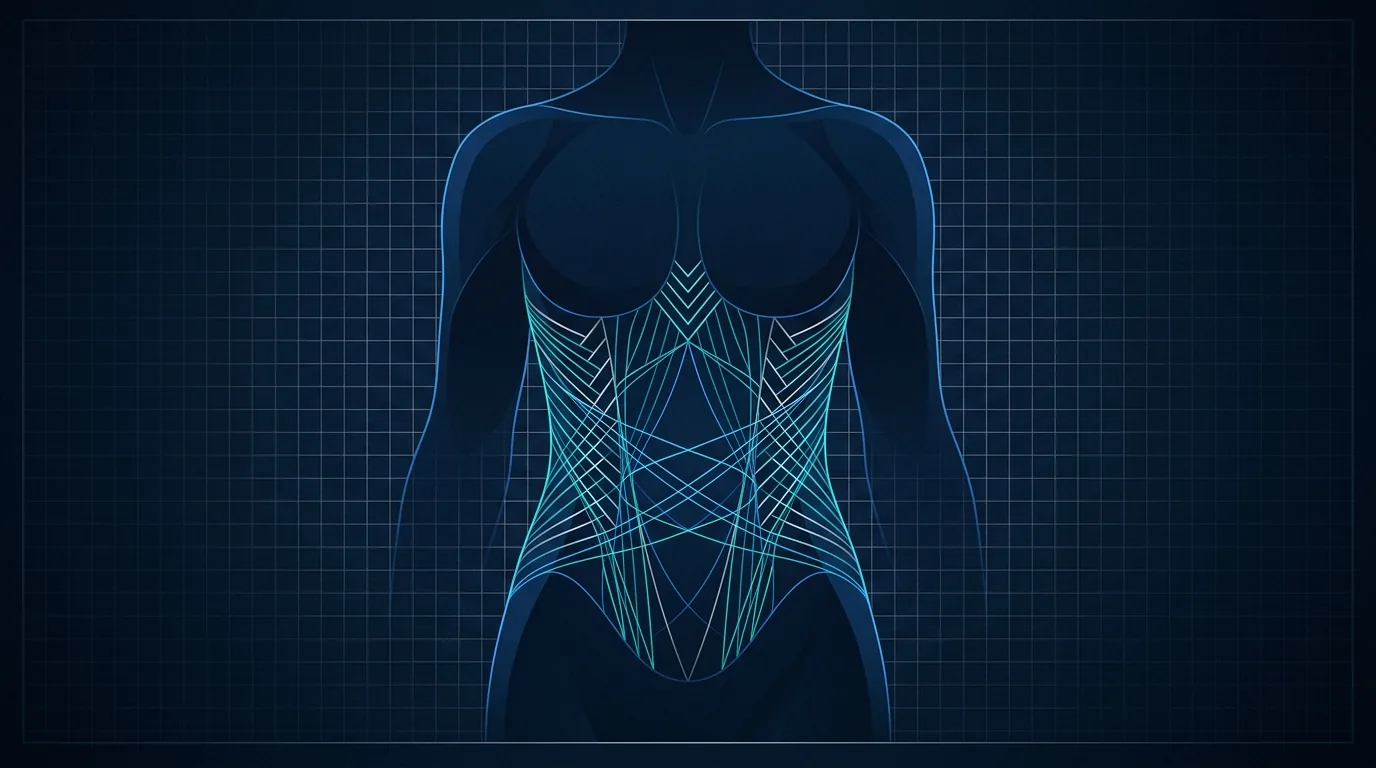
For this reason the aim is not simply a flatter outline but an abdomen that both looks and works better for the individual. Where function is clearly involved, as with significant wall laxity or diastasis, that part of the problem is assessed on its own terms rather than absorbed into an aesthetic goal.
Deciding whether to proceed, and when, is a shared judgment made with the full picture in view. A consultation is the place to set out the specific situation, weigh what can and cannot be achieved, and clarify what should be settled first. Anyone who suspects a coexisting diastasis will find that question addressed in depth at diastasiedintorni.it.
Frequently asked questions
- Is abdominoplasty a way to lose weight?
- No. Abdominoplasty removes excess skin and can tighten a lax wall, but it is not designed to reduce body weight or deep fat. Weight loss should be achieved first through diet and activity, and should be stable for several months before the operation is considered, because later weight changes can loosen the result again.
- Will exercise tighten loose skin instead of surgery?
- Exercise strengthens the muscles beneath the skin and improves tone and posture, which is valuable. It cannot restore elasticity to skin that has already been stretched past recovery. Once the elastic fibers of the skin have failed, no training program makes the envelope retract, which is the one problem for which this surgery exists.
- How long does recovery from abdominoplasty take?
- Recovery is measured in weeks. Light desk activity is generally possible within a couple of weeks, while physical exertion and sport resume later and gradually. A compression garment is worn for a period, swelling settles slowly, and the final shape takes several months to declare itself. The timeline varies with the individual and the extent of the procedure.
- Does the scar ever go away completely?
- No. The scar is permanent. It is placed low so it can usually be hidden by underwear, and it typically fades over the first year or more, but it does not vanish. How a scar matures depends partly on individual healing and is only partly controllable, which is why realistic expectations about it matter from the start.
- What changes if I also have rectus diastasis?
- If the two rectus muscles are separated along the midline, the problem involves both shape and function, and the assessment broadens considerably. Diastasis has its own measurement, symptoms, and treatment decisions. That subject is addressed in depth separately at diastasiedintorni.it, rather than treated as a minor addition to a contouring operation.
Published on: 2026-10-08 · Content by Dr. Federico Fiori